
Tech
Bvostfus Python: What It Is, What Can Be Verified, and How to Stay Safe


People searching for Bvostfus Python are usually trying to answer a practical question: Is it a Python package, a development tool, a tutorial platform, or newly released software? Several online pages describe it as a tool that simplifies programming, installation, dependency management, automation, and even machine learning. The problem is that these descriptions are rarely supported by official documentation.
As of July 2026, publicly available evidence does not establish Bvostfus as a recognised Python package, framework, programming language, or official Python project. That does not prove that the name has no meaning at all. It may belong to a private project, an unpublished tool, a website category, or simply a search phrase that has been repeated without a clearly identified product behind it.
For anyone considering downloading or installing it, that distinction matters.
Is Bvostfus Python a Real Software Package?
A legitimate public Python package normally leaves a clear technical trail. It has an exact package name, an identifiable publisher, installation documentation, version numbers, release notes, and usually a source-code repository. Developers can determine what it does, which Python versions it supports, what dependencies it requires, and how problems should be reported.
Those basic details are not clearly established for Bvostfus Python.
Search results contain articles that call it a development system, package, guide, or “new software.” Some claim it can organise projects, manage dependencies, support web development, or integrate with machine-learning libraries. However, repeating familiar Python capabilities does not verify the existence of a separate product.
No reliable technical identity should be assumed until the following information is available:
| Verification point | What a genuine project should provide |
|---|---|
| Exact package name | A consistent name used in installation and import commands |
| Publisher | A person, company, or organisation responsible for the software |
| Package record | A public listing with metadata and downloadable releases |
| Documentation | Instructions specific to the tool rather than general Python advice |
| Source repository | Code, licence details, issue tracking, and development history |
| Version history | Dated releases with documented changes |
| Import example | A working example showing the module’s actual functions |
Without these details, instructions such as “install the package with pip” are incomplete. A command needs an exact and verified package name. General claims about using the software with Flask, Django, TensorFlow, or PyTorch are also not evidence that those integrations exist.
Why the Name Appears in Search Results
There are several reasonable explanations for the term’s online presence.
One possibility is that Bvostfus is the name of a content website rather than a software product. Search results do show a website using that branding and publishing general informational material. A site can cover Python concepts without owning or maintaining a Python package.
The phrase might also refer to an internal project. Businesses and developers frequently create private tools that never appear in public package indexes. If that is the case, installation instructions would normally be supplied by the organisation that created the software.
A spelling error is another possibility. Python has thousands of packages, and a mistyped name can easily lead users toward unrelated pages. “Bvostfus” may have been confused with a different library or with bpython, a real enhanced interactive Python shell. The similar appearance of the names is not enough to conclude that they are related.
Finally, some technology websites publish articles around unfamiliar search phrases before confirming that an actual product exists. Once several pages repeat the same unverified description, the term can begin to look established even though none of the pages identifies original documentation or a developer.
Be Careful With Unverified Installation Commands
Running an installation command is not the same as reading an article. It allows downloaded code and its dependencies to enter a Python environment. That is why package identity should be confirmed before any command is copied into a terminal.
Do not assume that this is safe merely because a page presents it in a code block:
There is no dependable reason to use that command unless the exact package has been confirmed through an authentic project source. Even if a similarly named package appears later, its existence alone would not prove that it belongs to the software described in current articles.
Unfamiliar package names deserve particular attention because of typosquatting. In such attacks, a harmful or misleading package is published under a name resembling a legitimate library. A developer who mistypes the intended name may install the wrong code.
Warning signs include anonymous downloads, shortened addresses, missing source code, vague descriptions, copied documentation, inconsistent package names, and instructions asking for administrator access without explaining why it is necessary.
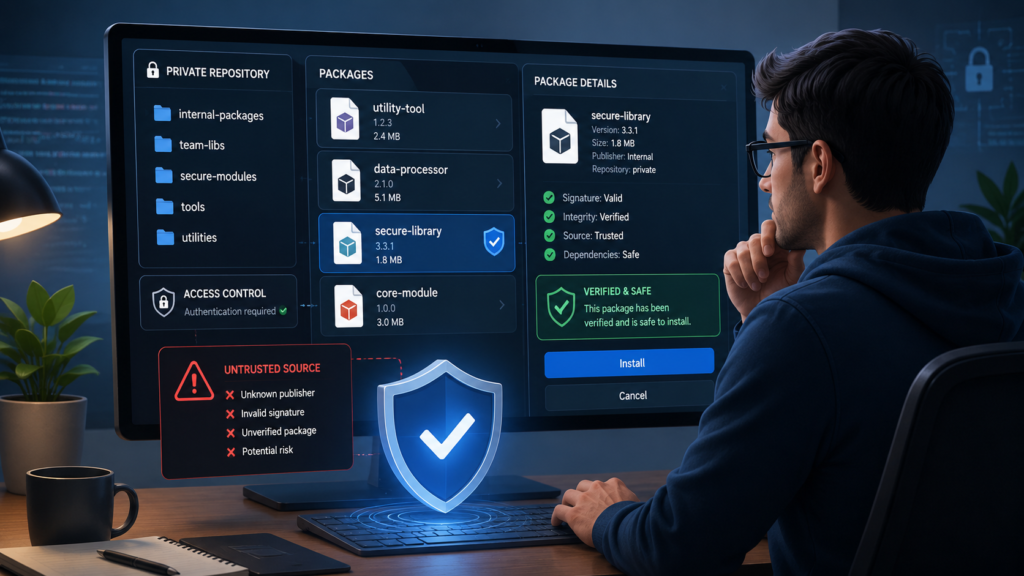
A Reliable Way to Check an Unknown Python Tool
Start by confirming the spelling. Return to the place where you first encountered the name and look for context. Was it mentioned in a course, error message, project file, company document, or random blog post? A name found inside a project’s requirements.txt file is more specific than one appearing only in an article title.
Next, search the Python Package Index for the exact package name. A useful listing should show release files, version history, supported Python versions, project ownership, and package metadata. Pay attention to whether the linked documentation and repository belong to the same developer.
Inspect the source repository when one is available. A credible project does not need to be large or famous, but its purpose should be understandable. Look for a licence, README file, installation instructions, recent commits, issue discussions, and code that matches the advertised functions.
Documentation should include real examples. If a tool claims to process data, manage dependencies, or automate tasks, it should show its actual classes, commands, or functions. Generic statements about Python’s popularity or flexibility do not demonstrate what a particular package can do.
If everything appears consistent and you still need to test the package, use an isolated virtual environment:
A virtual environment keeps test dependencies separate from other projects. It reduces accidental conflicts, although it does not make suspicious software harmless. Unknown code should not be tested on a device containing sensitive files or valuable credentials.
What to Use If You Simply Want to Learn Python
Readers searching for this term may actually be looking for a beginner-friendly Python setup. In that case, no special Bvostfus-branded software is required.
A standard installation includes the Python interpreter and commonly provides access to pip, the package installer. The built-in venv module can create separate environments for different projects. A basic script can be saved as hello.py:
From there, the right tools depend on the project. Flask and Django are established choices for web development, while NumPy and pandas are widely used for numerical and tabular data work. Automation scripts often rely on Python’s standard-library modules, including pathlib, csv, json, and subprocess.
If the intended name was bpython, that is a separate interactive interpreter interface designed to make experimentation more convenient. It offers features such as syntax highlighting, suggestions, and easier inspection while working in a terminal. It should not be treated as another spelling of Bvostfus without supporting context.
Understanding Errors Connected to an Unknown Name
An error message can help reveal what is actually wrong.
“Could not find a version that satisfies the requirement” usually means the requested package name cannot be found from the configured package source, no compatible release exists, or the spelling is incorrect.
ModuleNotFoundError means the active Python interpreter cannot import the requested module. The package may be missing, installed in another environment, or imported under a different name. It does not confirm that the module exists publicly.
If pip is not recognised, try invoking it through Python:
This approach helps ensure that pip belongs to the same Python interpreter being used for the project.
Dependency conflicts occur when two installed packages require incompatible versions of another library. Creating a fresh virtual environment and installing only verified requirements is often safer than repeatedly modifying a crowded global environment.
Conclusion
The safest description of Bvostfus Python is that it remains an unverified term rather than an established public Python product. Online articles may describe attractive features, installation steps, and possible uses, but those claims need an identifiable package, publisher, repository, and documentation behind them.
Until that evidence appears, avoid treating generic installation instructions as official guidance. Confirm the exact name, inspect the source, verify the maintainer, and test unfamiliar software only in an appropriately isolated environment. If the goal is simply to learn programming or build a project, the standard Python ecosystem already provides well-documented tools for that purpose.
Frequently Asked Questions
Is Bvostfus Python an official Python project?
There is no reliable public evidence showing that it is maintained by the Python Software Foundation or forms part of the official Python language and standard library.
Can I install it using pip?
Do not run an installation command until an authentic package listing, publisher, repository, and exact package name have been confirmed.
Is Bvostfus the same as bpython?
No verified connection has been established. bpython is a known interactive Python interface, while the Bvostfus name does not currently have the same clear technical identity.
Why do websites describe it as new software?
Some pages repeat broad descriptions without identifying an original developer or official documentation. Multiple articles can create visibility without proving that a product exists.
What should I do if a project requires it?
Ask the project owner for the precise package source, supported version, documentation, and checksum or release record. Do not substitute a similarly named download.
Read more :Tech Hacks PBLinuxGaming: A Practical Guide to Better Linux Gaming

Snapjotz Com is a general-interest digital publication, not the note-taking application or collaborative productivity platform described by several unofficial websites. As of August 2026, its official website primarily publishes articles about technology, finance, business, health, travel, education, real estate and lifestyle topics. Readers can browse this content through a conventional magazine-style website.
That distinction matters because online searches produce contradictory descriptions of the domain. Some articles advertise multimedia notes, cloud synchronisation and team collaboration, but these features are not documented on the official website. No verified product dashboard, mobile application or software pricing page could be found.
What Snapjotz Com Publishes
The official homepage identifies the website as an independent digital media publication. Its listed areas include business and entrepreneurship, technology and artificial intelligence, finance and investing, health and lifestyle, real estate, travel and education.
The website also contains category sections for automotive subjects, home improvement, pets and general-interest material. Its structure resembles a multi-topic online magazine: visitors choose a category, open an article and move between related posts. It is therefore more accurately described as a publishing website than an interactive online service.
| Detail | Verified information |
|---|---|
| Website type | Independent digital publication |
| Main purpose | Publishing general-interest articles |
| Major subjects | Business, technology, finance, health, lifestyle, real estate, education and travel |
| Productivity software | Not documented on the official domain |
| Reader account | No verified requirement for ordinary article access |
| Named owner or company | There is no reliable public confirmation |
| Editorial policies | Available on the website |
| Medical and financial advice | Presented as general information, according to its disclaimers |
The About page says the publication aims to provide informative, educational and reader-focused coverage. It also states that older material may be reviewed and expanded when regulations or research change. These are the publisher’s own descriptions of its practices; they should not be interpreted as an independent assessment of every article.
Why Online Descriptions Are So Confusing
The Snapjotz Com name has become associated with two very different ideas. The live domain presents a publication, while numerous third-party posts describe a digital notebook capable of storing text, photographs, audio and video. Some even mention shared workspaces, automatic syncing, offline access and premium subscriptions.
Those software claims require evidence such as official documentation, a sign-up page, screenshots, an app-store listing, release notes or a working product interface. None is clearly provided by the official publication. Consequently, there is no reliable public confirmation that Snapjotz.com offers those tools.
The conflicting descriptions may have resulted from writers making assumptions based on the word “jot” or confusing the domain with a similarly named product. Another possibility is that early articles repeated one another without checking the live website. The exact origin of the story cannot be confirmed, so presenting one explanation as established fact would be misleading.
This case illustrates why branded search results need careful verification. An article can appear confident and detailed while describing features that are absent from the website it supposedly reviews. Specific but unsupported claims—such as user totals, storage limits, launch dates or subscription prices—should not be repeated without primary documentation.
Editorial Standards and Transparency
Snapjotz.com maintains an editorial policy that describes human research, factual verification and editorial review. Publishing a policy is useful because it gives readers a standard against which individual articles can be assessed.
However, an editorial policy remains a statement of intended practice. Readers should still examine whether a particular article links to primary evidence, identifies its writer, distinguishes reporting from opinion and shows when it was published or updated. This is especially important for pages discussing investments, health conditions, legal questions or rapidly changing technology.
The public information reviewed for this article does not clearly identify an editor-in-chief, a registered publishing company or a complete team with independently verifiable professional biographies. There is no reliable public confirmation of who ultimately owns or controls the publication. That does not prove improper conduct, but it limits the accountability readers can establish from the website alone.
Visible transparency pages are still a positive practical feature. The site provides editorial, privacy, terms and disclaimer pages rather than leaving visitors without any explanation of its policies. Nevertheless, the existence of those pages cannot guarantee the accuracy of all published material.
Is Snapjotz Com Legit and Safe to Read?
Snapjotz Com is a real, functioning content website in the limited sense that it hosts accessible articles and maintains identifiable publication categories and policy pages. There is no verified basis for calling it a fake productivity application because the official domain does not currently present itself as that type of product.
“Legitimate” should not be confused with “authoritative,” however. A functioning blog may publish useful introductory material without having the reporting resources, specialist editors or institutional oversight of an established news organisation. Each article must be judged on its own sourcing and accuracy.
It is also impossible to provide a permanent guarantee that any website is technically safe. Security conditions, advertisements and external links can change. Visitors should keep their browser updated, avoid unexpected download prompts and confirm that links lead to the intended domain before entering personal information.
The site’s privacy policy states that it uses standard log files, cookies and web beacons. Readers concerned about tracking should review that policy and manage browser cookie settings accordingly. Secure browser transmission does not mean that every claim in an article has been medically, financially or technically validated.
How Much Should Readers Trust Its Articles?
Snapjotz.com can be used for casual reading or as a starting point for researching an unfamiliar subject. It should not automatically be treated as the final authority, particularly when an article could influence someone’s money, health, legal rights or personal safety.
Its legal disclaimers say that published material is intended for general informational and educational purposes. The site specifically addresses financial, medical and real-estate content, where inaccurate or outdated advice can have serious consequences.
Before acting on an article, readers should check whether it cites government agencies, recognised academic research, official company documentation or qualified professionals. Publication dates also matter: tax rules, investment regulations, software features and medical guidance can change significantly.
Claims without traceable evidence should be independently verified. For example, a financial article should be compared with the relevant regulator’s guidance, while health information should be checked against sources such as the NHS, CDC or another appropriate public-health authority.
What to Remember Before Visiting
The most important finding is straightforward: the live website is a multi-topic publication. Descriptions of it as an AI notebook, multimedia journal or collaborative workspace are unsupported by the official domain as it currently appears.
Readers do not need to assume the website is fraudulent simply because other pages describe it incorrectly. At the same time, they should not mistake an active domain and professionally written policies for proof that every article is comprehensive or error-free. Its content is best approached with the same source-checking habits that should be applied to any unfamiliar general-interest publisher.
Frequently Asked Questions
Does Snapjotz Com have an official app?
No verified Android, iOS or desktop application is linked from the official publication. There is no reliable public confirmation of an official Snapjotz.com app.
Can I create and synchronise notes on the website?
The official domain does not document note creation, cloud synchronisation, shared notebooks or multimedia journaling features.
Who owns Snapjotz.com?
The public-facing pages reviewed do not clearly name a domain owner, registered publishing company or executive leadership team. There is no reliable public confirmation of the individual or organisation controlling it.
Does the website provide professional financial or medical advice?
Its own disclaimer says its material is for general informational and educational purposes. Readers should consult appropriately qualified professionals before making important decisions.
Troozer Com
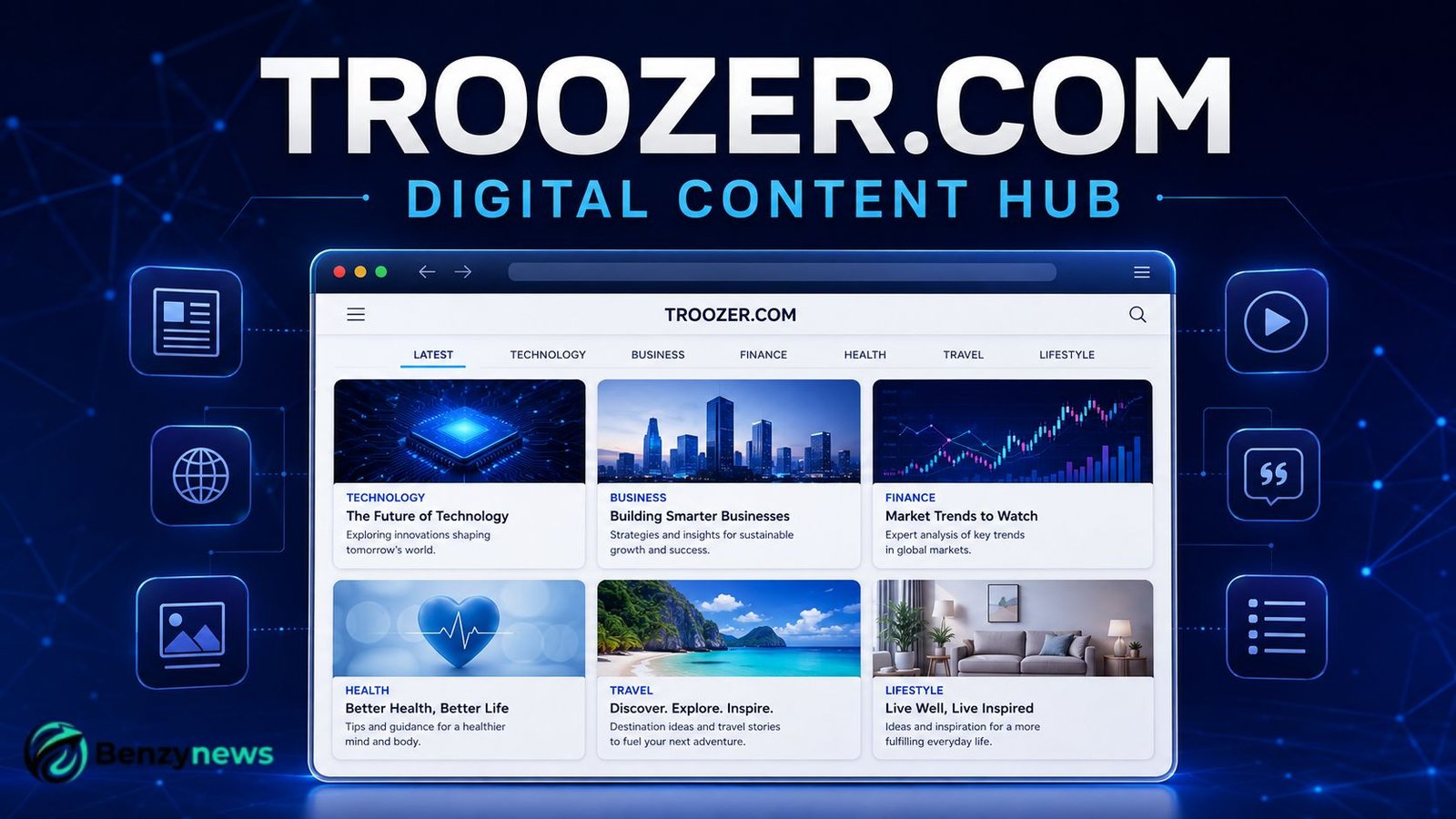
Search for Troozer Com and you may come away more confused than when you started. Some pages on the web describe it as an all-in-one productivity service, others call it an online tools platform, and still others suggest that it has shopping or e-commerce functions. Those descriptions do not line up particularly well with the website itself.
A direct look at Troozer.com presents a much simpler picture: it operates as a multi-category digital publishing website. Its pages are organized around articles covering subjects such as technology, business, finance, health, education, lifestyle, real estate, travel, sports, and law. The site’s own description likewise identifies it as a content-focused publishing platform rather than a marketplace or software service.
That distinction matters. Someone arriving after reading a vague third-party description could reasonably expect an app, dashboard, account system, or collection of online tools. What they actually encounter is much closer to an online magazine or general-interest information site.
What Is Troozer Com Actually?
At its core, Troozer Com is a general digital publication. Readers browse individual articles, move between categories, search for topics, and discover other posts in much the same way they would on a conventional blog or online magazine.
The website itself says that it is not a marketplace, software tool, or service provider. Its public explanation also says ordinary readers do not need to create an account or enter payment information simply to access articles.
This is important because several independent articles have described the domain very differently. Claims about project-management dashboards, cloud storage, automation, shopping comparison, private search, and similar features appear around the web. During research, those descriptions could not be reconciled with the site’s visible structure or its own explanation of what it does.
In practical terms, the most reliable way to understand the domain is to look at what is demonstrably available rather than repeat features attributed to it elsewhere.
The site is primarily about reading content.
A Broad Mix of Subjects Rather Than One Specialist Niche
One noticeable feature of Troozer.com is the breadth of its coverage. It does not concentrate on a single industry.
Its archives and navigation contain categories including technology, business, health, finance, education, lifestyle, real estate, sports, travel, automotive topics, fashion, entertainment, and law. Individual posts range from website performance and digital marketing to healthcare, dentistry, personal finance, property, transportation, and consumer subjects.
That broad approach makes the site closer to a multi-topic magazine than a specialist publication.
There are advantages and disadvantages to that model. A general reader may appreciate being able to discover very different subjects on the same website. On the other hand, specialist publications often make their editorial expertise easier to assess because their writers and coverage remain within a defined field.
Readers should therefore judge each Troozer.com article on its own evidence. A useful technology explainer, for example, does not automatically establish expertise in medicine, investing, or legal matters.
The archives also contain posts carrying publication dates going back to at least 2020. That tells us that material associated with the domain has existed for several years. It does not, however, prove that its ownership, editorial team, design, or publishing strategy has remained unchanged throughout that entire period.
Why Are There So Many Conflicting Descriptions?
This is arguably the most interesting part of researching the website.
Search results contain articles portraying the domain as everything from a productivity platform to a digital utility hub. Some descriptions even present detailed features such as account registration, task management, integrations, dashboards, or online applications.
The problem is evidence.
Troozer.com’s own public material explicitly pushes back against those characterizations. It describes the website as a digital media and publishing platform and states that it does not provide the software tools or marketplace functionality sometimes attributed to it. The site’s public LinkedIn presence has made the same clarification.
For readers, this provides a useful lesson in researching unfamiliar websites: repetition does not turn a claim into a fact.
If ten blogs repeat the same unsupported feature list, that still does not demonstrate that the feature exists. The strongest evidence is usually the actual service, its documentation, clearly identifiable product pages, and verifiable first-hand testing.
The confusion around Troozer Com appears to be largely a problem of inconsistent third-party descriptions. Readers should be skeptical of any article promising specific functions that they cannot actually locate on the website.
What You Can Expect When Browsing
The site’s structure is familiar rather than complicated. Visitors encounter category navigation, article headlines, publication information, search functions, and individual story pages.
Its content archive is substantial enough to show that it is not simply a one-page domain created around a mysterious brand name. Older posts coexist with more recent material, and category pages gather related stories together.
The site also provides standard publishing-related pages such as terms, a disclaimer, privacy information, and a DMCA policy. A visible copyright-infringement procedure, for instance, explains how rights holders can report material they believe infringes their work.
None of these elements by themselves guarantee editorial accuracy. They simply help establish what kind of website is operating.
That distinction is worth keeping in mind. Website legitimacy and information reliability are related but separate questions. A real publishing site can still publish an inaccurate article, just as an established newspaper can make errors. Readers should evaluate important claims rather than treating the existence of a functioning domain as proof that every statement on it is correct.
Is Troozer.com Safe to Visit?
For an ordinary visitor, the relevant question is narrower than many online “scam or legit?” articles make it sound.
Troozer.com describes itself as an open-access publication rather than a store or financial platform. Its own current material says readers are not required to create an account, provide credit-card details, or complete transactions merely to read its content.
That removes several risks normally considered when evaluating an unfamiliar online shop. You are not deciding whether to send money to an unknown merchant, for example, if you are simply reading a public article.
Still, “safe to browse” should never be confused with “everything published here should be accepted without verification.”
This matters especially for health, finance, and legal material. Advice in those areas can affect serious decisions. Check important claims against authoritative sources and, where necessary, seek an appropriately qualified professional.
Normal web precautions also remain sensible. Pay attention before downloading files, providing personal information, following promotional links, or leaving the original domain for another website. Those habits apply to unfamiliar content sites generally, not just this one.
How Should Readers Judge Its Articles?
A better question than “Can I trust the whole site?” is “What evidence supports this particular article?”
Look for identifiable sources behind factual claims. Check whether numerical statements have context. For technical information, see whether specifications match official documentation. Medical claims deserve comparison with recognized health authorities, while legal information should be checked for jurisdiction and current law.
Publication dates matter as well. Technology, regulations, prices, medical guidance, and financial rules can change. An older article may have been reasonable when written but no longer reflect present circumstances.
Authorship is another useful clue. When an article covers a specialized field, readers can ask whether the author’s relevant qualifications or experience are explained. If they are not, the material may still provide a useful introduction, but it should not automatically be treated as expert guidance.
These checks are particularly valuable on broad multi-category publications because expertise in one section does not necessarily transfer to another.
What Troozer.com Is Not
Based on the website’s current presentation and its own public clarification, it should not be described as an established productivity application, shopping marketplace, financial service, or all-in-one business software suite.
There is no solid reason to instruct readers to create a Troozer account, upload documents, manage projects, compare products through a supposed marketplace, or configure software integrations when those functions cannot be verified on the actual site.
That may sound like a minor correction, but it fundamentally changes the user’s expectations. Someone searching for a service wants to know what they can do with it; someone visiting a publication wants to know what they can read there.
Keeping those two ideas separate produces a much more accurate picture.
Conclusion
The mystery surrounding Troozer Com is greater in search results than it is on the website itself. Direct evidence points to a multi-category digital publishing platform containing articles across technology, business, health, finance, lifestyle, education, travel, real estate, and other subjects.
The most important caution is not that the domain has been proven fraudulent; research does not support making that claim. Instead, readers should be wary of unsupported third-party descriptions that transform it into a software platform, marketplace, or collection of digital tools.
Approach it as you would any broad online publication: read what is useful, distinguish editorial content from professional advice, and independently verify important claims before acting on them.
Frequently Asked Questions
Is Troozer.com a shopping website?
No evidence on the current site supports describing it as an online store. Troozer.com identifies itself as a digital publishing platform rather than a marketplace.
Do I need an account to read Troozer.com?
The platform states that ordinary access to its content does not require mandatory account creation.
Does Troozer.com offer productivity tools?
Despite claims found on some third-party websites, its current public description says it is not a software-tool platform. Specific claims about dashboards, automation, cloud storage, or task-management functions should therefore be treated cautiously.
What subjects does Troozer.com cover?
Its content spans numerous categories, including business, technology, finance, health, education, lifestyle, real estate, sports, travel, fashion, automotive subjects, and law.
Can I rely on its health, financial, or legal articles?
They can be used as starting points for general reading, but important health, financial, and legal decisions should be checked against authoritative sources or qualified professionals.
Read more :Delta Flight DL275 Japan Diversion LAX: What Happened on the Detroit–Tokyo Flight?

Coolkingzone com is a general-interest publishing website covering subjects ranging from technology and finance to education, health, travel, law, and automobiles. It resembles an online magazine more than a specialist publication, bringing articles from numerous categories together under one domain.
That broad scope can make the site useful for casual discovery. A visitor might read about digital marketing, move to an article about personal finance, and then explore travel or home-improvement content. However, variety alone does not establish authority. Readers should still consider who wrote each article, when it was published, and whether its claims are supported by reliable evidence.
Understanding that distinction is important, especially because some of the website’s topics involve money, health, legal matters, and other decisions where outdated or incomplete information can have real consequences.
What Coolkingzone com actually is
Coolkingzone com is primarily an informational blog. It is not presented as an online store, subscription service, social network, or specialist research database. Its main purpose appears to be publishing articles for readers searching for introductions, explanations, practical guides, and general advice.
The website’s public homepage uses a news-magazine layout. Content is arranged under sections such as Editor’s Picks, Main News, Trending Now, and Featured News. Article previews normally display a category, headline, author name, estimated reading time, and comment count.
The main navigation highlights several core subjects:
- Technology
- Finance
- Business
- Education
- Health
- Law
- Travel
- Automotive
Other categories, including fashion, lifestyle, relationships, and home improvement, also appear within the wider archive. A search field helps visitors look for a particular subject, while a light-and-dark display option offers some control over readability.
Public articles can be opened without creating an account or purchasing a subscription. This makes the site easy to explore, although unrestricted access should not be confused with verified accuracy.
A content library built around variety
The most noticeable characteristic of the platform is its range. Recent homepage selections have included digital-marketing trends, residency by investment, online gold trading, equipment for brow stylists, and end-of-tenancy cleaning. Older archive pages contain articles about education loans, health tests, vehicle rental, banking, printers, online learning, and personal relationships.
The following overview shows how readers may encounter different types of information:
| Subject area | Typical content | What readers should verify |
|---|---|---|
| Technology | Digital tools, equipment and emerging trends | Product specifications, update dates and official documentation |
| Finance and business | Loans, trading, banking and workplace topics | Fees, regulations, risks and provider credentials |
| Health and education | Tests, treatments, study resources and school guidance | Medical evidence, professional qualifications and current requirements |
| Travel and lifestyle | Destinations, rentals, cleaning, fashion and relationships | Local rules, prices, availability and practical relevance |
This variety is convenient for browsing, but it also creates an editorial challenge. A writer who explains a printer or social-media tool competently may not necessarily have the qualifications needed to discuss medical treatment, legal disputes, investments, or immigration programs. Every article therefore needs to be judged individually.
Where the site can be useful
For a reader who wants a quick introduction, the platform can serve as a starting point. Many headlines address specific questions, and the article previews show approximate reading times. Some pieces can be read within a few minutes, while more detailed guides take longer.
This format works well when the goal is to understand basic vocabulary, discover issues worth researching, or obtain a simple overview before consulting more authoritative material. For example, an article about education loans might help a student identify terms such as eligibility, repayment period, interest rate, and supporting documents. The student can then check those details directly with a lender.
The category system is another practical feature. Someone interested in personal finance can browse the finance archive instead of searching the entire site. Likewise, readers can move directly to technology, travel, education, or automotive posts.
For most visitors, Coolkingzone com is likely to be most helpful during the early stage of research—not necessarily at the point where a final decision must be made.
The credibility question deserves a careful answer
There is not enough publicly verifiable information to describe the website as a major news organization, academic source, or professional advisory service. Its homepage displays bylines such as Jamie, Roland Miller, quikernews, and Adoosylinks, but a byline alone does not demonstrate a writer’s qualifications.
Clear author biographies, specialist credentials, editorial standards, correction procedures, and ownership information are valuable trust signals. When those details are limited or difficult to locate, readers have less context for assessing why a particular author should be trusted on a complex subject.
The site’s archives also show some unevenness. Certain category pages contain repeated or closely duplicated article listings, including examples in the health archive and other sections. Some older posts address topics that can change substantially over time. An article may still be readable while no longer reflecting current prices, regulations, products, or professional guidance.
These observations do not prove that every article is unreliable. They simply mean that trust should be based on the evidence within each page rather than the appearance of the website as a whole.
A strong article should identify its sources, distinguish facts from opinion, explain limitations, and provide enough detail for important claims to be checked. If a post makes confident statements without showing where the information came from, it should be treated as a general overview rather than definitive guidance.

Is the website safe to browse?
Reading publicly available articles is different from giving a website personal information. The site’s visible content can generally be explored without registration, payment, or a mandatory download. That keeps the immediate interaction relatively simple.
Nevertheless, no responsible review can guarantee that a website will always remain secure. Advertising networks, external pages, downloads, and site ownership can change. Visitors should use an updated browser, avoid downloading unfamiliar files, and be cautious before entering an email address, phone number, payment information, or account password.
Domain identity matters as well. Search results may display similarly named websites using different endings or altered spellings. A domain such as Coolkingzone.net or Coolkingzonecom.com is not automatically the same property as Coolkingzone.com. Readers should check the address bar before assuming that two similar names belong to the same operator.
The presence of HTTPS is useful because it encrypts the connection between the browser and the website. It does not, by itself, prove that every article is accurate or that every recommendation is trustworthy. Technical security and editorial reliability are separate questions.
How to evaluate an article before relying on it
A practical review begins with the publication date. Technology tutorials, financial comparisons, visa information, medical recommendations, and legal explanations can become outdated quickly. If no recent update is shown, verify the details elsewhere.
Next, examine the author. A general writer may be perfectly capable of explaining a simple lifestyle topic. For investment, health, immigration, or legal advice, however, relevant professional experience becomes much more important.
Look closely at the claims. Specific figures, promises, medical conclusions, and statements about laws should be supported by identifiable evidence. Vague phrases such as “experts say” provide little value unless the experts or studies are named.
The final check depends on the subject:
- Confirm financial products through regulated providers and official regulators.
- Verify medical information with recognised health authorities or a qualified clinician.
- Check visa and residency rules on government sources.
- Compare product specifications with the manufacturer’s documentation.
- Confirm travel restrictions, prices, and schedules before making a booking.
Suppose an article recommends several online trading platforms. It may help readers discover available options, but it should not be the only basis for depositing money. Licensing, withdrawal conditions, fees, account protections, and regional restrictions require separate verification.
The same principle applies to health content. A general explanation may improve understanding, but it should not replace diagnosis or treatment from a qualified professional.
Who is the platform best suited for?
The site is most appropriate for casual readers, students gathering preliminary ideas, and people who enjoy browsing articles across unrelated subjects. Its broad archive may also help someone discover terminology for a more focused search.
It is less suitable as a single source for major financial, medical, legal, academic, or immigration decisions. In those situations, the website can introduce a subject, but primary documents and qualified experts should carry more weight.
Conclusion
Coolkingzone com is a broad informational website with an accessible magazine-style layout and articles covering many everyday interests. Its category navigation, search function, short reading formats, and open access make it convenient for general exploration.
Its breadth is both its strength and its limitation. Readers can discover a wide range of subjects in one place, but the depth, freshness, and authority of individual posts may vary. Used as a starting point—and combined with careful fact-checking—the platform can be useful. It should not automatically be treated as the final authority on high-stakes questions.
Frequently Asked Questions
What is Coolkingzone com?
It is a multi-category informational website publishing articles about technology, finance, business, education, health, travel, law, automobiles, lifestyle, and related subjects.
Is the website free to use?
Its publicly visible articles can be read without a paid subscription or mandatory account.
Does it sell products or services?
The main website functions as a content publication. Individual articles may discuss companies, products, or services, so readers should evaluate any recommendations separately.
Can I trust its financial or health articles?
They may provide introductory information, but important claims should be confirmed through qualified professionals, regulators, official institutions, or current primary sources.
Are similarly named domains part of the same website?
Not necessarily. A different domain extension or spelling can indicate a completely separate website, even when the names look almost identical.
Read more :Bvostfus Python: What It Is, What Can Be Verified, and How to Stay Safe


 Celebrities3 months ago
Suzanne Chase: What Is Known About Chevy Chase’s First Wife?
- Celebrities3 months ago
Sherrill Redmon: The Historian, Feminist, and Archivist Behind a Remarkable Career
- Tech2 months ago
Stay Always Updated With TXEPC: A Practical Guide for Regular Readers
- Celebrities3 months ago
Laurie Holmond: The Private Life Behind a Well-Known Name
- Tech2 months ago
TheLaptopAdviser Expert Reviews: What Buyers Should Know Before Choosing a Laptop
- Celebrities2 months ago
Monica Bellucci Daughter: Deva Cassel’s Life, Career and Famous Family
- Celebrities2 months ago
Raquel Pedraza: The Former Tennis Player Behind an Often-Told Story
- News3 months ago
OnlyWorkMoods com Explained: What the Website Publishes and How Useful It Really Is