Celebrities
Island Boys Net Worth: How Much Are the Viral Twins Really Worth?

The Island Boys turned a short poolside freestyle into one of the internet’s most recognizable memes. Twin brothers Alex and Franky Venegas quickly gained millions of followers, secured paid appearances and charged fans for personalized videos. Their highly publicized spending also created the impression that they had become millionaires almost overnight.
Estimating the Island Boys net worth is much harder than counting their video views, however. The brothers have never released audited financial records, while many of the figures circulating online come from entertainment websites or their own unverified statements. As of 2026, the most frequently quoted estimate places their combined wealth at around $250,000, but that number should be treated as an informed guess rather than a confirmed balance sheet.
What Is the Island Boys Net Worth in 2026?
A reasonable public estimate is approximately $250,000 combined for Alex and Franky Venegas. Some websites previously valued them at between $1 million and $2 million during the height of their popularity, but there was never enough financial evidence to confirm those numbers.
| Detail | Publicly reported information |
|---|---|
| Real names | Alex Venegas and Franky Venegas |
| Stage names | Flyysoulja and Kodiyakredd |
| Known for | The viral “I’m an Island Boy” freestyle |
| Breakthrough year | 2021 |
| Frequently quoted combined net worth | About $250,000 |
| Main reported income sources | Cameo, subscription content, social media, music and appearances |
| Reliability of estimate | Low, because their assets and liabilities are private |
The estimate is for the pair together, not necessarily $250,000 each. It is also possible that one brother has more money than the other because they maintain individual accounts, participate in separate projects and may not divide every payment equally.
Net worth measures assets after liabilities. It is not the total amount someone has earned during a career. A creator could collect $500,000 in gross payments and still have a much smaller net worth after platform fees, taxes, management costs, rent, legal bills and personal spending.
That distinction is especially important when discussing internet personalities whose income can rise and fall within months.
How a Poolside Freestyle Became a Business
Alex and Franky, who are of Cuban descent, were born in Florida in July 2001. They began releasing music under the names Flyysoulja and Kodiyakredd before becoming widely known as the Island Boys.
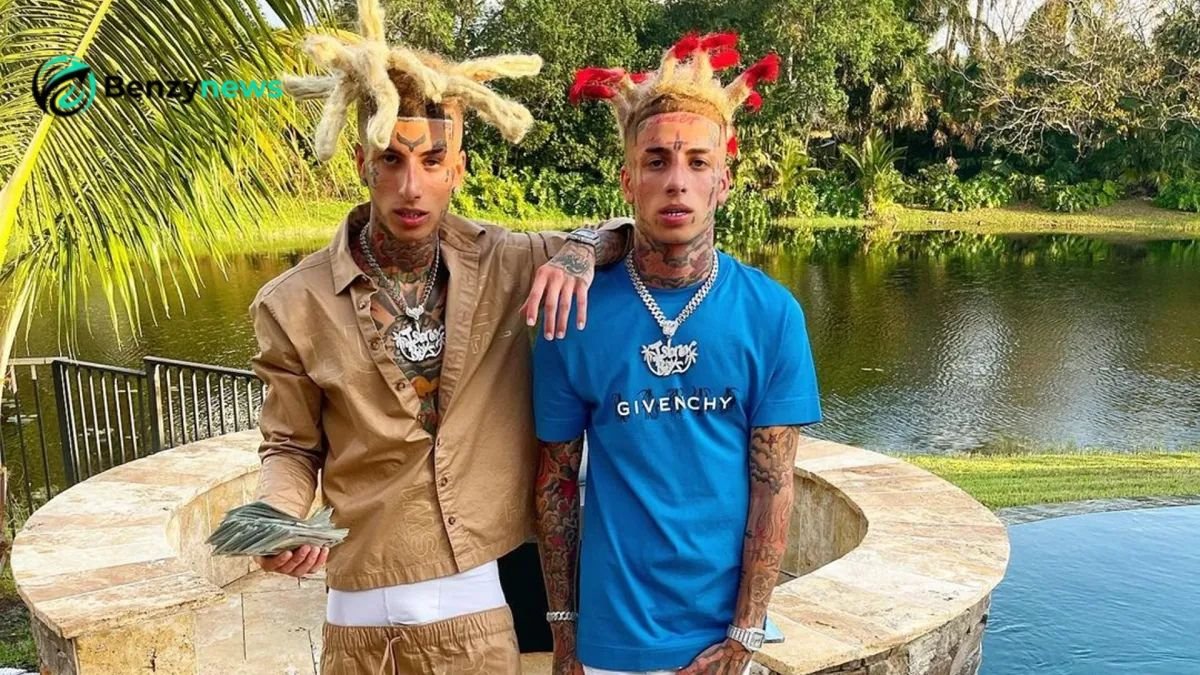
Their breakthrough came in October 2021 when a video showed them performing a rough version of “I’m an Island Boy” in a swimming pool. The vertical dreadlocks, extensive tattoos and unusual vocal delivery made the clip instantly recognizable. Some viewers genuinely enjoyed it, while many others shared it as a joke or created parodies.
Commercially, the reason for watching mattered less than the scale of the attention. The phrase spread across TikTok, Twitter and YouTube, generating reaction videos from major entertainers and online creators. The brothers then released a produced version of the track with an official music video.
The song did not turn them into conventional chart-topping rappers. Instead, it gave them something valuable in the creator economy: a highly recognizable identity. For a period, people who had never listened to one of their complete songs still knew exactly who the Island Boys were.
That recognition opened several ways to make money.
Cameo Was an Important Early Income Stream
One of the duo’s clearest business opportunities came from Cameo, where public figures sell personalized video messages. Fans could pay the brothers to repeat their catchphrase, sing a custom version of the viral freestyle or record a birthday greeting.
In early 2022, their joint Cameo page reportedly listed personal videos at roughly $210, with business requests starting at $600. Prices changed over time and were occasionally discounted, so those figures cannot simply be multiplied by the number of reviews to calculate total earnings.
Even so, the service appears to have generated meaningful income during their viral peak. Their former representative, Dovi Bezner, later said that the brothers sometimes spent two or three hours a night recording requests. He also claimed that Cameo demand eventually slowed and that the twins owed him money. The brothers did not publicly verify those allegations.
Cameo illustrates both sides of viral fame. It can produce substantial cash when a meme is fresh, but orders may decline rapidly once the audience moves on. Unlike a salary, it offers no guarantee that this month’s earnings will continue into the next.
Subscription Content Produced Large but Disputed Figures
Paid subscription content later became another major source of revenue. Several entertainment publications reported that the brothers generated approximately $389,000 between May and July 2023, including more than $200,000 during June.
Those figures have been widely repeated, although they have not been supported by independently audited accounts. Even if accurate, they would represent gross creator earnings during a limited period—not the amount that remained in the brothers’ bank accounts.
The twins attracted significant criticism for provocative material used to promote their page. Controversy increased attention, and attention can produce new subscribers. It can also damage long-term sponsorship opportunities, reduce platform access and make mainstream partnerships more difficult.
In 2025, Franky claimed that the brothers had received a combined $14 million for controversial promotional content, with $6 million going to him and $8 million to Alex. No reliable documentation has confirmed that statement. A representative for OnlyFans also said the platform itself did not have a commercial agreement with the duo.
That does not mean they earned nothing from subscribers. It means the specific $14 million story should not be treated as established fact. Without platform statements, tax records, contracts or payment documents, it remains a claim made by one of the brothers.

Music, YouTube and Social Media Revenue
The Island Boys have released singles, EPs and longer projects, while their official videos have accumulated millions of views. Streaming royalties and YouTube advertising therefore contribute something to their income.
The exact amount is unavailable. Music payments vary according to the service, listener location, ownership agreements, distributor fees and royalty splits. A track with millions of plays can generate useful revenue without making its performers wealthy, particularly when income is divided between several rights holders.
YouTube presents the same problem. Public view counts do not reveal how many views were monetized, what advertising rates applied or whether copyright claims redirected part of the revenue. Estimates that multiply every channel view by a fixed rate tend to overstate certainty.
Their social following can also support paid promotions, livestream gifts and brand partnerships. Yet follower totals alone do not establish income. Advertisers care about recent engagement, audience quality and brand safety. A controversial creator with millions of followers may receive fewer mainstream offers than a smaller personality with a more predictable audience.
Public appearances and influencer boxing provide additional possibilities. Franky participated in a boxing event promoted by streamer Adin Ross in 2025, but his compensation was not publicly disclosed. Any amount assigned to the appearance would therefore be speculation.
Why Reported Earnings Do Not Equal Personal Wealth
Viral creators often describe gross revenue as if it were personal profit. The financial reality is less glamorous.
Money earned through a creator platform can be reduced by the platform’s share, taxes and payments to managers or collaborators. Maintaining a public image creates further expenses: travel, security, video production, jewelry, vehicles and expensive housing.
The Island Boys frequently displayed luxury cars and large Florida homes online. Such images were sometimes interpreted as proof of ownership, although appearing beside an expensive vehicle does not show whether it was purchased, financed, leased or borrowed. The same applies to property. The brothers have been associated with rented homes, so the market value of those buildings should not automatically be counted among their assets.
They have also spoken publicly about missed payments and housing difficulties. In a 2024 video, the brothers discussed problems involving rent and car payments. Such comments suggest that their cash flow was not always stable, although they do not prove that both brothers were completely broke.
Legal trouble may create additional costs, but no reliable public accounting shows how much either brother has paid in attorney fees, fines or related expenses. It would be misleading to insert an invented figure into their liabilities.
Did the Island Boys Lose Their Money?
It is more accurate to say that their income appears to have become less predictable.
During late 2021 and early 2022, they occupied a rare position: they were the subject of a worldwide meme, and customers were willing to pay for direct participation in it. Cameo requests, interviews and promotional opportunities benefited from that intense visibility.
The problem was durability. Their fame was tied heavily to one catchphrase and one distinctive image. Music alone did not establish a comparable mainstream career, and repeated controversy became a central part of their strategy for remaining visible.
Reports of missed payments, declining Cameo demand and disputes with a former representative support the possibility of financial decline. However, “broke” is often used too casually online. Neither brother has published a bankruptcy filing or complete financial statement proving that he owns nothing.
They also retain potentially valuable assets: recognizable names, established social accounts and an audience that continues to follow their activities. These can still generate money, although probably with greater volatility than during their viral peak.
Conclusion
The available evidence does not support presenting Alex and Franky Venegas as confirmed multimillionaires. The commonly cited Island Boys net worth of approximately $250,000 combined is plausible, but it remains an unofficial estimate based on incomplete information.
The twins have almost certainly earned significant gross revenue from personalized videos, subscription content, social platforms and music. At the same time, unverified claims—particularly the reported $14 million payment—should not be confused with documented wealth. Their story is a useful example of how quickly online attention can generate money and how little that revenue reveals about someone’s lasting financial position.
Frequently Asked Questions
How much are the Island Boys worth together?
Their combined wealth is commonly estimated at about $250,000 as of 2026. The figure has not been independently confirmed through financial records.
What are the Island Boys’ real names?
Their names are Alex Venegas and Franky Venegas. Alex is known as Flyysoulja, while Franky performs as Kodiyakredd.
How did the Island Boys make their money?
Their reported income sources include Cameo videos, paid subscription content, music streaming, YouTube advertising, social media promotions and public appearances.
Did the Island Boys really make $14 million?
Franky claimed that he and Alex received a combined $14 million connected to subscription content. No reliable financial documents have confirmed the claim, and OnlyFans denied having a commercial agreement with them.
Are the Island Boys still earning money?
Yes, they can still earn through social media, music, appearances and direct fan purchases. Their current annual income is private and likely varies considerably from year to year.
Read more :Monica Bellucci Daughter: Deva Cassel’s Life, Career and Famous Family